

Saturators & Enhancers

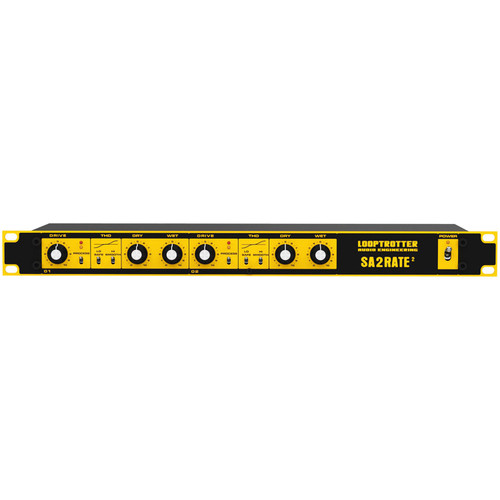


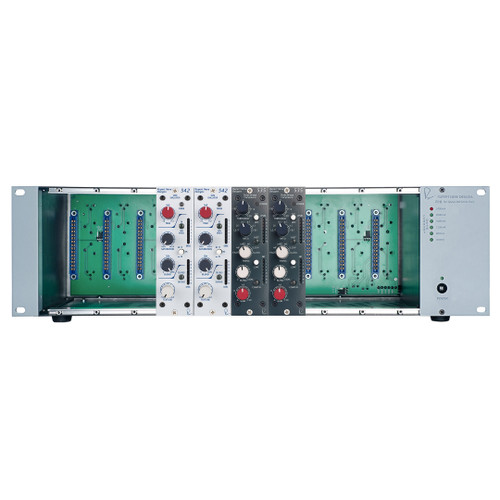


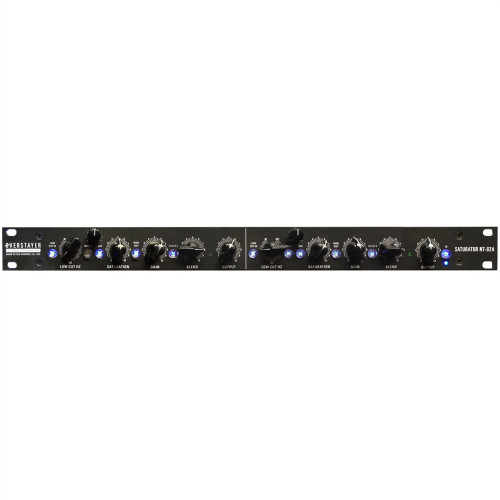


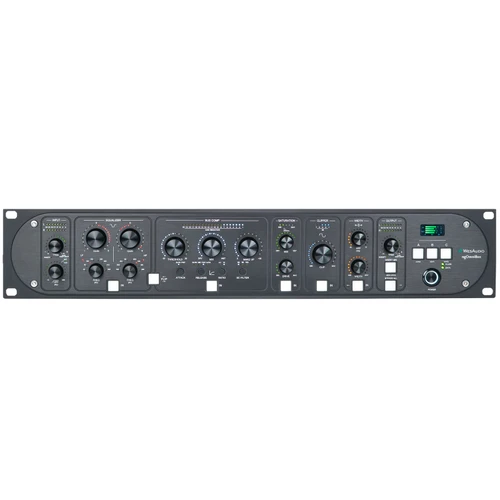

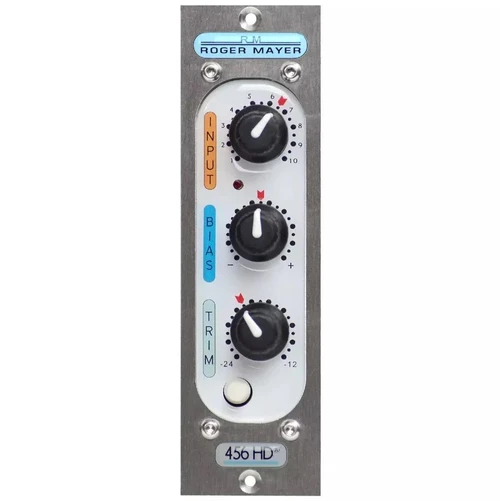

Saturators & Harmonic Enhancers at Front End Audio
Saturators & Harmonic Enhancers give recording, mixing and mastering engineers creative control over the color, density, harmonics, transients and dimension of a signal. Front End Audio carries analog saturation and enhancement processors ranging from tube, tape and transformer-inspired designs to harmonic generators, transient shapers, stereo image processors and complete mix-bus tools. These processors can subtly sweeten a vocal, add weight to drums, bring density to bass and guitars, create more depth across a stereo mix or be pushed harder when obvious analog character and distortion are part of the sound. For engineers looking beyond conventional EQ and compression, Saturators & Enhancers provide another powerful way to shape how a recording feels.
What Does an Analog Saturator Do?
An Analog Saturator intentionally introduces nonlinear behavior that creates additional harmonic content as the signal passes through the circuit. Depending on the design and how hard it is driven, the result can range from barely noticeable harmonic enrichment to obvious coloration, compression, soft clipping and distortion. Tube stages, transformers, tape-inspired circuits, discrete amplifiers and other analog topologies can all produce different saturation characteristics, which is why there is no single “saturation sound.” Some engineers use these processors to bring character to individual tracks, while others rely on subtle saturation across buses or complete mixes for additional density, cohesion and dimension.
Tube Saturation for Warmth and Harmonic Color
Tube Saturators use vacuum-tube circuitry to generate harmonic content and tonal coloration, but the amount and character can vary dramatically between designs. A tube processor can be used gently to add richness and density to vocals, bass, keyboards and stereo mixes or driven harder for more obvious saturation and distortion. Current hardware in this category ranges from dedicated stereo Tube Saturators to processors that combine tube stages with transformers, filters and other analog circuitry, giving engineers control over far more than simple “warmth.” Tube saturation is especially useful when the goal is to make a clean digital source feel more dimensional without relying solely on conventional Equalizers.
Tape Saturation and Analog Tape Character
Tape-style saturation is used to recreate or explore some of the nonlinear behavior associated with recording to magnetic tape, including harmonic coloration, transient rounding and increased density when levels are pushed. Hardware tape emulators and saturation processors can bring these characteristics into modern DAW-based workflows without requiring a traditional tape machine. Engineers can use tape-style processing on individual tracks such as drums, bass and vocals, across instrument buses or on the stereo mix when a more cohesive analog character is desired. Some processors provide relatively subtle tape-inspired color, while others allow the saturation effect to become a much more obvious part of the production.
Transformer Saturation and Analog Coloration
Transformers are another important source of analog coloration and can create harmonic content as signal level and circuit behavior interact. Dedicated transformer processors allow engineers to use that character intentionally instead of receiving it only as a byproduct of a preamp, console or other piece of Outboard Gear. Transformer-based enhancement can be effective on drums, bass, guitars, vocals, buses and full mixes where additional weight, density or harmonic complexity is useful. Studios already working with Microphone Preamps can also use dedicated saturation processors later in the signal path when they want independent control over gain and coloration.
Harmonic Enhancers and Sonic Color
Harmonic Enhancers can shape the perceived energy and character of a recording without operating exactly like a traditional Equalizer or Compressor. Depending on the processor, harmonic generation may increase perceived presence, richness, density or excitement while additional circuitry controls how that enhancement is distributed across the frequency spectrum. These tools can be particularly effective when a track technically sits in the right frequency and dynamic range but still feels flat or lacks personality. Because harmonic enhancement changes the structure of the signal itself, it can produce results that are difficult to achieve by simply boosting frequencies with an Equalizer.
Saturation for Vocals, Drums, Bass and Instruments
Saturation can be applied to individual sources as subtly or aggressively as the production requires. Vocals can gain density and harmonic presence, bass can pick up additional definition and weight, guitars and keyboards can be pushed toward more obvious coloration, and drums can benefit from transient rounding, added harmonics or aggressive distortion. When working with drum tracks, saturation can also complement Compressors & Limiters by changing the shape and harmonic content of transients rather than relying entirely on gain reduction. Experimenting with input level, drive and output compensation is often central to finding the point where a saturator moves from subtle enhancement into an intentional effect.
Mix Bus Saturation and Analog Glue
Saturators & Enhancers are increasingly used across stereo buses and complete mixes where small amounts of harmonic processing can influence the overall density, character and sense of cohesion. Mix-bus processors may combine saturation with EQ, compression, stereo image control or transformer stages, allowing several complementary forms of analog processing to be applied from one piece of hardware. Engineers working with Summing Mixers or Studio Consoles can also integrate a saturator into the stereo signal path when additional harmonic color is desired before the final mix is captured.
Saturators & Enhancers for Mastering
Mastering applications usually call for more restraint, but harmonic processing can still be extremely useful when a finished mix needs additional density, depth or tonal character. Stereo Saturators, transformer processors and mastering-oriented enhancers may provide stepped controls, precise channel matching, Mid/Side processing or other features that make subtle adjustments easier to repeat. Saturation can also be combined with Equalizers and Compressors & Limiters to build a complete analog mastering chain, with each processor contributing a different part of the final tonal and dynamic result.
Transient Shapers and Impact Processing
Not every product in this category works primarily through harmonic saturation. Transient Shapers and impulse processors can change the attack and sustain characteristics of drums, percussion, acoustic instruments and complete mixes without operating like conventional threshold-based compression. Increasing attack can give drums and percussion greater impact, while reducing it can soften aggressive transients; sustain controls can change the apparent body or ambience of the source. These processors can work alongside Compressors & Limiters when the production needs envelope control that is difficult to achieve through compression alone.
Stereo Enhancement and Image Processing
Stereo Enhancers and image processors give engineers another way to shape the width, focus and spatial presentation of a mix or stereo source. Depending on the design, these processors may manipulate Mid/Side information, frequency-dependent width, phase relationships or other aspects of the stereo signal while also providing harmonic coloration. Used carefully, stereo enhancement can help create greater separation or dimension without simply increasing level or high-frequency content. These tools are especially useful on buses and mastering chains where the relationship between the center image and stereo information is an important part of the final mix.
500-Series Saturation and Color Processors
The 500-Series format has become an important home for analog coloration tools, with modules offering saturation, harmonic generation, transient shaping, tape-style processing and other specialty functions in a compact modular system. Engineers can combine these processors with 500-Series Preamps, 500-Series Equalizers and 500-Series Compressors & Limiters to build complete analog recording and mixing chains inside one chassis. Explore all 500-Series Modules when building or expanding a modular processing rack.
Build a Complete Analog Color and Processing Chain
Saturation is most useful when it is considered alongside the other processors in the signal path. A Microphone Preamp can establish gain and initial analog character during recording, an Equalizer can shape frequency balance, and Compressors & Limiters can control dynamics while a Saturator or Harmonic Enhancer adds another layer of color, density or texture. For hybrid mixing, these processors can also be integrated with Summing Mixers and Studio Consoles, giving engineers multiple ways to bring analog character into a DAW-based production.

 Sign Up for exclusive sales and offers!