Insert Cables
Insert Cables at Front End Audio
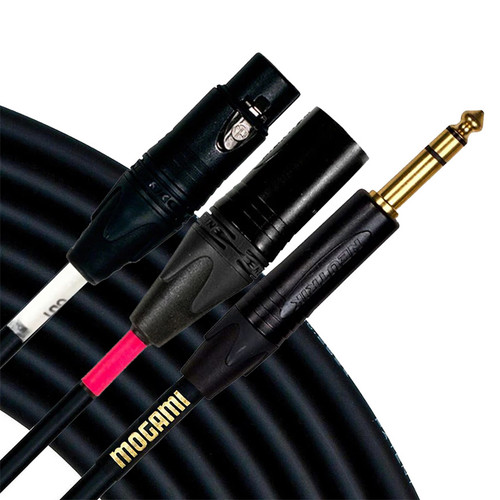
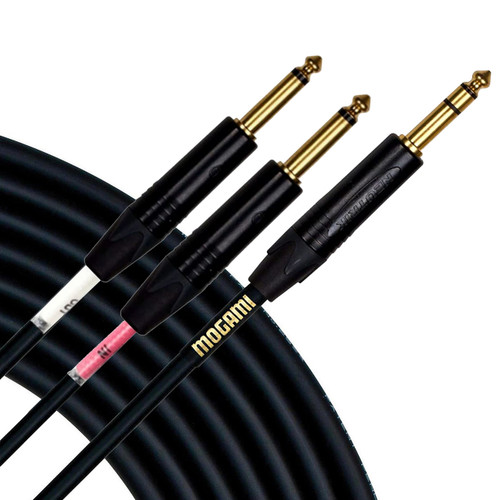
Insert Cables make it possible to send a signal out to a hardware processor and return the processed signal through a single insert connection, which is why they remain useful in studios built around consoles, mixers and other equipment with dedicated insert points. Front End Audio carries professional Insert Cables for connecting compressors, equalizers and other analog processors to studio recording systems, with TRS-to-dual-TS and TRS-to-XLR configurations for different types of hardware. Unlike a standard stereo cable, an insert cable uses the tip and ring of the TRS connection as separate send and return paths, allowing one jack to handle both sides of the outboard loop. The important part is matching the breakout connectors to the inputs and outputs of the processor you are trying to integrate.
Choosing the Right Insert Cable for Compressors, EQs and Outboard Gear
The right insert cable starts with the insert jack on the mixer, console or recording hardware and ends with the connectors required by the processor. A piece of gear with 1/4-inch inputs and outputs may call for a TRS-to-dual-TS insert cable, while processors using XLR connections are better served by a TRS-to-XLR breakout. Either way, the signal flow is essentially the same: one side carries the send from the insert point to the processor input, and the other brings the processed signal back. This makes insert cables particularly useful with Compressors & Limiters and Equalizers, where you may want the processor placed directly into a channel signal path rather than routed through a separate auxiliary send or patching arrangement.
TRS to Dual TS Insert Cables for Studio and Mixer Inserts
A TRS-to-dual-TS insert cable is one of the most familiar configurations for mixers and recording equipment with quarter-inch insert jacks. The single TRS connector carries both sides of the insert path, while the two TS connectors break that connection into separate send and return leads for the outboard processor. Labeling those breakout ends matters because reversing the send and return will prevent the signal path from working as intended. These cables are particularly practical with compressors, gates, equalizers and effects processors that use individual 1/4-inch inputs and outputs. When choosing a length, think about the physical distance between the insert point and the rack rather than automatically buying extra cable; a clean, appropriately sized connection is considerably easier to trace when you are troubleshooting a session.
TRS to XLR Insert Cables for Professional Outboard Equipment
TRS-to-XLR insert cables solve the same routing problem when the hardware processor uses XLR connections instead of quarter-inch jacks. A typical configuration breaks the single TRS insert connection into separate male and female XLR connectors so the send can feed the processor input and its output can return to the insert point. Mogami dominates Front End Audio's current Insert Cables assortment with Gold-series TRS-to-XLR and TRS-to-TS models in several practical lengths, making it a particularly relevant option for studios wiring higher-end analog processors. Connector gender is important here, so it is worth looking at the actual input and output connectors on the equipment rather than assuming every XLR breakout uses the same arrangement.
Insert Cables vs. Patchbays for Analog Studio Routing
Insert cables are excellent when a processor needs to live directly in a channel insert path, but they are not always the most flexible solution once a studio accumulates a larger collection of analog hardware. If you regularly move compressors and equalizers between different tracks or signal chains, a Patchbay can bring those connections to a central routing point and make the hardware considerably easier to reconfigure. Smaller studios may be perfectly happy keeping a favorite compressor connected to one insert with a dedicated cable, while larger hybrid rooms often combine permanent insert wiring with patchbay routing for processors that need to move around. Neither approach is inherently better—the right choice depends on how often the signal path changes and how much outboard equipment needs to remain accessible.
Building a Clean Hardware Insert Signal Chain
A dependable insert setup is mostly about getting the small details right. Confirm which connector carries the send and which carries the return, choose the correct XLR or TS configuration for the processor, keep cable lengths sensible and label the breakout ends if they are not already clearly identified. If several pieces of outboard gear are being integrated, documenting the signal flow can save a surprising amount of time later, especially when a compressor or EQ seems to have disappeared from the chain. Front End Audio has been helping studios connect and integrate professional analog hardware since 2003, and our non-commissioned team can help you determine which insert cable configuration fits your console, mixer or processor. If you are unsure which connectors your setup requires, call us at 888-228-4530 and we can help you work through the send and return before you order.

Sign Up for exclusive sales and offers!