

Keyboards & Synthesizers






Synthesizers & Keyboards at Front End Audio
Synthesizers & Keyboards are some of the most immediate creative tools in a modern studio, giving musicians and producers a hands-on way to build everything from bass lines and leads to pads, sequences, textures and completely new sounds. Front End Audio carries hardware synthesizers for recording, electronic music production, sound design and performance, including compact desktop modules and full keyboard instruments using analog, digital, wavetable and hybrid synthesis approaches. Our current selection includes instruments from Waldorf, Arturia, Novation and IK Multimedia. The right synth is less about finding the one with the longest feature list and more about choosing an instrument whose sound engine and interface encourage the kind of music you want to make.
Choosing the Best Hardware Synthesizer for Your Studio
The best Hardware Synthesizer for your studio starts with the type of sounds you want to create and how you prefer to interact with an instrument. Some musicians want a straightforward signal path with immediate oscillator, filter and envelope controls, while others want deep modulation, multiple synthesis engines, extensive wavetable manipulation or large preset libraries. Polyphony matters if you regularly play chords and layered pads, while a monophonic or paraphonic architecture can be completely appropriate for bass lines, leads and sequenced parts. Also consider whether you want an integrated keyboard or a desktop module that can be controlled from an existing MIDI keyboard or DAW. A synth that fits naturally into the room and encourages experimentation will usually get more use than one whose architecture constantly slows you down.
Analog, Digital and Hybrid Synthesizers: Which Is Right for You?
Analog, digital and hybrid synthesizers each provide different approaches to sound generation, but none should automatically be considered better than the others. Analog synths are often valued for direct control and oscillator-and-filter workflows, while digital instruments can offer wavetable synthesis, large modulation systems, greater polyphony and sound-generation techniques that would be difficult to accomplish entirely in the analog domain. Hybrid synthesizers deliberately combine elements of both. The Arturia MicroFreak Hybrid Synth, for example, combines digital oscillator engines with an analog filter, making it a useful example of how modern synth design can cross traditional categories. The better buying question is what kind of synthesis architecture gives you the sounds and control you actually want.
Wavetable Synthesizers for Modern Sound Design
Wavetable Synthesizers are especially useful for producers who want timbres that can evolve substantially over time. Instead of being limited to a small set of fixed oscillator waveforms, wavetable instruments can move through collections of wave shapes and then manipulate that material with filters, envelopes, LFOs and modulation routing. Waldorf has a particularly important place in this part of the category, and the current Front End Audio lineup includes instruments ranging from the compact Waldorf Blofeld Desktop Synthesizer to the significantly deeper Waldorf Iridium Desktop Synthesizer. Wavetable synthesis is a strong fit for evolving pads, motion-heavy textures, digital basses and sound-design work where modulation is as important as the original oscillator waveform.
Desktop Synthesizers vs. Keyboard Synthesizers
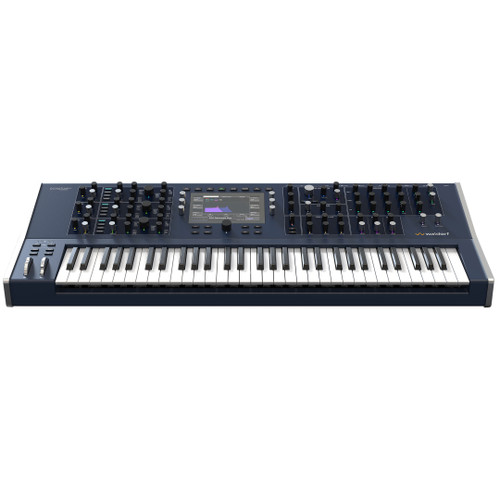
Choosing between a Desktop Synthesizer and a keyboard version is largely about space and workflow. Desktop synths are ideal when you already own a MIDI controller or want several sound modules available from one keyboard, and their smaller footprint can make them easier to integrate into a production desk or synth rack. Keyboard synthesizers provide a more self-contained instrument and can be faster when you want to sit down and play without routing another controller first. The Waldorf Blofeld is a good example because Front End Audio carries both desktop and keyboard configurations, letting you choose essentially the kind of physical workflow that fits the studio. Producers building larger hardware rigs often mix both formats, using one primary keyboard to control several desktop instruments through MIDI.
Polyphonic Synthesizers for Pads, Chords and Layered Sounds
Polyphonic Synthesizers allow multiple notes to sound simultaneously, making them especially valuable for chords, pads, evolving textures and layered keyboard parts. Voice count becomes important when patches use long releases or when several notes overlap, because complex arrangements can consume available polyphony quickly. The Novation Peak Synthesizer is a strong current example of a desktop polyphonic instrument built for deep programming and studio sound design, while Waldorf's larger synthesizers take the idea considerably further with expansive digital and hybrid architectures. If your music revolves primarily around monophonic basses and leads, maximum voice count may not be the deciding factor; for harmonically dense production, it becomes much more important.
Synthesizers for Bass Lines, Leads and Electronic Music Production
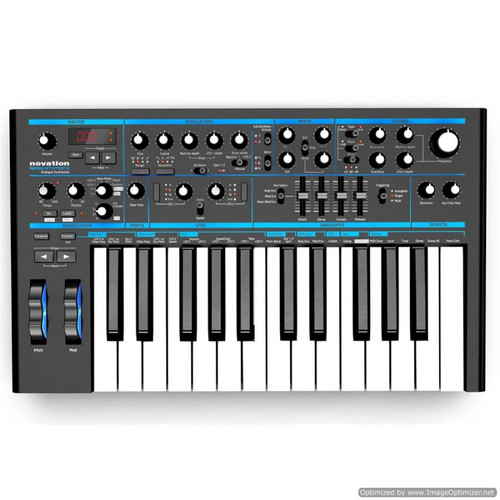
Hardware synths remain especially popular for bass and lead sounds because real-time controls make it easy to shape a part while it is being played or recorded. Filter cutoff, resonance, envelopes, modulation and performance controls can all become part of the musical phrase instead of settings adjusted only after the fact. The Novation Bass Station II Synthesizer is a good example of an instrument focused around this type of hands-on synthesis workflow, while more complex polyphonic and wavetable instruments can move from straightforward bass patches into layered textures and atmospheric sound design. The best choice depends on whether you want a focused instrument that does a particular job quickly or a deeper synthesis platform you can spend years exploring.
Integrating Hardware Synthesizers with a DAW and Recording Studio
A Hardware Synthesizer becomes even more flexible when it is integrated cleanly with the rest of the recording system. MIDI can handle note, clock and control information, while the synth's analog outputs are typically recorded through an Audio Interface just like another instrument. Larger hardware setups may benefit from a Patchbay or dedicated line mixer so several synth outputs stay connected without constantly moving cables. You can also combine hardware instruments with Plug-Ins & VSTi, using software for instruments that make sense in the box while keeping hands-on hardware available for the parts where physical control and a dedicated synthesis engine improve the creative process. Front End Audio can help you choose a synthesizer around both the sounds you want and the way it needs to connect to your existing studio, so call us at 888-228-4530 if you want to talk through the options.

 Sign Up for exclusive sales and offers!