

Microphone Cables








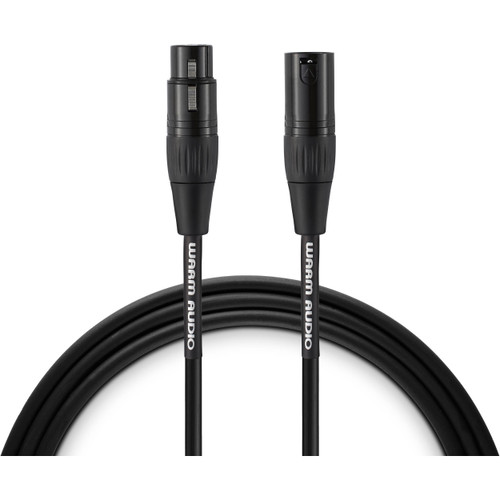
Microphone Cables at Front End Audio
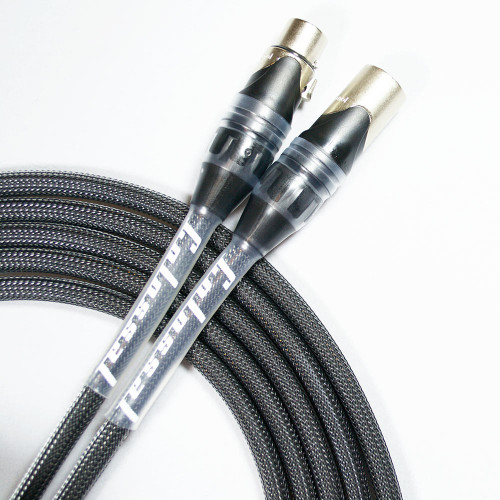
A microphone cable may look like one of the simplest pieces in the recording chain, but it carries the low-level signal between your Microphone and Microphone Preamp before that signal has been amplified to line level. That makes reliable connectors, shielding, strain relief and overall construction especially important in a working studio. Front End Audio carries professional Microphone Cables for vocals, drums, acoustic instruments, guitar cabinets, room microphones and everyday studio use, with options ranging from affordable utility cables to premium studio-grade designs. The goal is not to buy a cable based on hype or price alone, but to choose something dependable enough that it disappears from the recording process and keeps working session after session.
Choosing the Best Microphone Cable for Recording
The best microphone cable for recording is one that fits the environment and holds up to the way it will actually be used. A cable that stays permanently connected behind a rack has very different demands than one that gets coiled, dragged around a tracking room and repositioned several times a day. For general studio use, we look for solid XLR connectors, dependable strain relief, good shielding and a jacket that is flexible enough to route cleanly without feeling fragile. Length matters too. A cable should comfortably reach the microphone position without putting tension on the connectors, but excessive cable piled on the floor adds clutter and makes troubleshooting harder. If you are wiring a permanent vocal booth or equipment rack, shorter purpose-sized cables often make more sense, while drums, room mics and larger tracking spaces may require considerably longer runs.
Balanced XLR Microphone Cables for Studio Recording
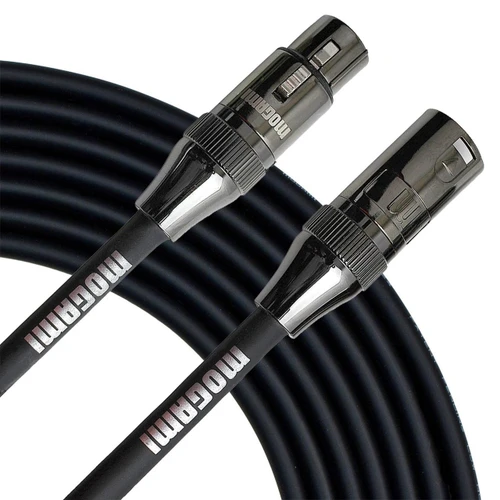
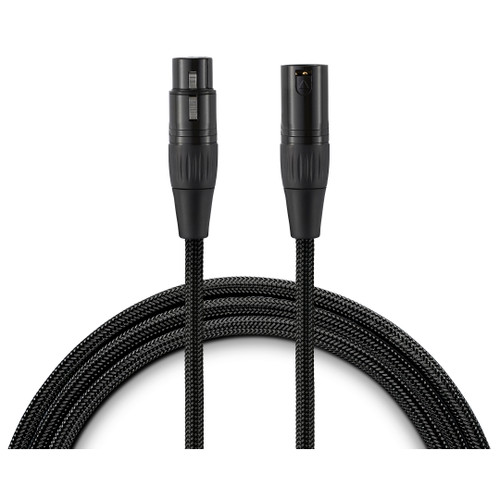
Most professional studio microphones use balanced three-pin XLR connections, which makes XLR microphone cables the standard link between the microphone and preamp. Balanced wiring helps reject interference that may be picked up along the cable run, an important consideration because microphone-level signals are relatively low before they reach the preamp. A standard mic cable normally uses an XLR female connector at the microphone end and an XLR male connector at the preamp, interface or stage box end. From there, the amplified signal may continue into an Audio Interface or additional analog processing. That signal flow is straightforward, but getting the basic connection right is important—particularly in larger studios where dozens of microphone cables may be in use at the same time.
Mogami, Warm Audio and Professional Studio Microphone Cables
Mogami has a particularly strong presence in professional studio cabling and is heavily represented in Front End Audio's Microphone Cables category, with Gold and Platinum Studio cables among the current options. Warm Audio is another purposeful choice here, offering both Professional and Premier microphone cable lines for studios looking at different construction and price levels. Front End Audio's own in-house studio uses Warm Audio Premier cables, so this is gear our team has actual day-to-day experience with rather than simply another cable hanging on the wall. RapcoHorizon also has a substantial presence with professional Neutrik-equipped microphone cables, while Colossal Cable serves engineers looking for another premium studio-cable option. These brands approach construction and pricing differently, which gives you useful choices without changing the fundamental requirement: a dependable balanced connection between the microphone and the rest of the recording chain.
Microphone Cable Length, Shielding and Connector Quality
When comparing professional microphone cables, three practical considerations deserve more attention than marketing language: length, shielding and connectors. A properly shielded cable helps protect the microphone signal from electromagnetic and radio-frequency interference, while quality connectors and strain relief become particularly important at the points where cables are repeatedly plugged in, unplugged and flexed. Cable length should be chosen around the room rather than simply buying the longest option available. Ten- and fifteen-foot cables can be ideal around vocal booths and close equipment positions, while twenty-five-foot and longer cables provide the reach needed for drums, room microphones and larger tracking spaces. Keeping several useful lengths on hand is often more practical than trying to make one cable size handle every position in the studio.
Microphone Cables for Condenser, Dynamic, Ribbon and Tube Microphones
Standard balanced XLR microphone cables can be used with many Condenser Microphones, Dynamic Microphones and Ribbon Microphones, provided the microphone and connected equipment use conventional three-pin XLR connections. Phantom power for compatible condenser microphones travels through the same balanced XLR cable from the preamp or interface, so a separate power cable is not normally required. Tube microphones are different because many use dedicated multi-pin cables between the microphone and their external power supply, and those cables are typically supplied specifically for that microphone. Before replacing a specialty microphone cable, confirm the exact connector and wiring requirements rather than assuming a standard XLR cable will substitute for it.
Build a Reliable Microphone Signal Chain
A good microphone cable is only one part of the front end, but every part of that path matters. Start with the right microphone for the source, connect it with a dependable cable and pair it with a preamp or interface input that provides the gain and features the microphone requires. In larger studios, cable management and labeling become equally important; knowing which cable belongs to which microphone or room line can save a surprising amount of time during setup and troubleshooting. Front End Audio has been helping recording studios put together microphone and signal-chain systems since 2003, and our non-commissioned team can help you sort through cable length, connector type, microphone compatibility and the rest of the recording path. If you are not sure which microphone cable makes the most sense for your setup, call us at 888-228-4530 and we'll help you get the connection right.

 Sign Up for exclusive sales and offers!