

Summing Mixers



Summing Mixers at Front End Audio
Summing mixers give recording engineers and mix studios a flexible way to combine multiple signals into a stereo mix bus, making them useful for hybrid mixing, DAW summing, stem-based workflows and professional studio routing. Front End Audio carries summing mixers ranging from streamlined stereo summing systems to high-channel-count designs with analog circuitry, transformer color, tube stages, inserts and additional mix bus processing. Whether you are looking for a simple way to route multiple DAW outputs, add character to a stereo mix or build a complete hybrid mixing environment, a quality summing mixer can become a central part of the studio workflow.
What Is a Summing Mixer?
A summing mixer combines multiple audio signals into a stereo output, allowing engineers to route stems, subgroups or individual tracks through dedicated hardware before returning the finished mix to a recording system. In many studio setups, tracks such as drums, vocals, guitars, keyboards and effects are sent from the DAW through separate converter outputs and combined through an external summing mixer. Depending on the design, a summing system may provide straightforward signal combining or additional features such as level control, panning, stereo buses, inserts, saturation, transformer coloration or other forms of analog processing.
Choosing a Summing Mixer for Your Studio
The right summing mixer depends on your required channel count, available audio interface or converter outputs and how much control you want outside the DAW. Common configurations include 8-channel, 16-channel and higher-channel-count systems, with some models designed primarily for clean and transparent summing while others intentionally add harmonic character or mix bus coloration. Features such as channel inserts, multiple stereo buses, output transformers, gain controls, panning and onboard processing can also play an important role when choosing a system. For hybrid studios, it is especially important to match the summing mixer to the number of analog outputs available from your existing digital recording system.
Analog Summing and Hybrid Mixing
Analog summing remains one of the most common applications for summing mixers, particularly in studios that want to combine the flexibility of a DAW with the workflow and character of analog hardware. Individual tracks or stereo stems can be routed through an analog summing path before the final stereo mix is captured back into the digital system. Some summing mixers are designed to remain highly transparent, while others use transformers, tubes, discrete circuitry or saturation stages to add additional tonal character. This hybrid approach allows engineers to retain digital editing, automation and recall while integrating analog gain staging, outboard processing and hardware signal routing into the mixing process.
16-Channel Summing Mixers and Stereo Mix Bus Systems
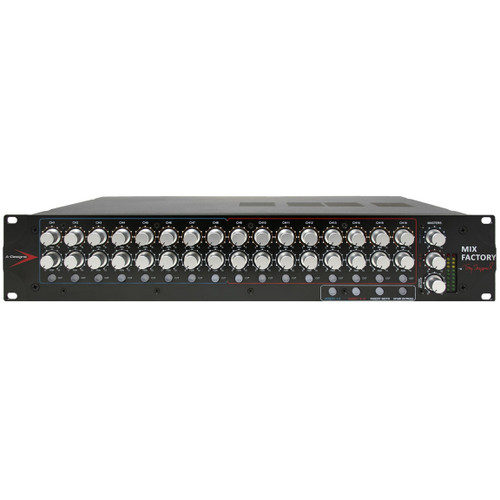
Sixteen-channel summing mixers are especially popular because they provide enough inputs to route multiple stereo stems from a DAW while keeping the system practical and manageable. Eight stereo pairs can be used for groups such as drums, bass, guitars, vocals, keyboards and effects, which are then combined through the summing mixer's stereo bus. Some systems expand beyond basic summing with channel inserts, multiple buses, transformer options, saturation controls or onboard dynamics processing, while others intentionally keep the signal path simple. Choosing between these approaches depends on whether you want the summing mixer primarily for routing and signal combining or as an active part of the sonic character of the mix.
Summing Mixers for Mixing and Mastering
Summing mixers can serve several roles in professional mixing and mastering workflows. During mixing, they provide a dedicated stereo mix bus for combining stems and integrating outboard processors, while mastering engineers may use certain summing systems for stem processing, gain staging or additional analog routing before final conversion. Some designs offer precise channel matching and highly transparent operation, while others are intentionally built to introduce color, saturation or additional harmonic character. The best choice depends on whether the goal is clean signal management, creative analog processing or a combination of both.
Build a Complete Hybrid Mixing System
A summing mixer works best as part of a carefully planned studio signal chain. A multi-output Audio Interface or dedicated AD/DA Converter can provide the outputs needed to send stems from your DAW into the summing mixer, while Compressors & Limiters and Equalizers can be integrated into individual stem paths or the stereo mix bus for additional processing. Building the interface, conversion, summing and outboard processing stages as a complete system can make it easier to create an efficient hybrid workflow that fits the way you record and mix.

 Sign Up for exclusive sales and offers!